Joanna Psaros
18 June 224

As an unmarried 33-year-old, the past few months have been dominated by two conflicting trends. The first is that, to my unashamed joy and excitement, it seems almost all of my close friends and family are either trying to fall pregnant, currently pregnant, or facing the chaotic, sleep-depriving, undeniably joyful new challenge of raising young children.
The second big development involved the global science community forcibly extracting the heads of our governments, profiteers of carbon-emitting industries such as coal, and ordinary citizens worldwide from the proverbial sand and admit that twenty-five years on from the Kyoto Protcol’s historic formation, we haven’t quite got this whole climate crisis under control just yet. In fact, with wildfires raging out of control across Canada, Southern Europe, and North Africa and July of this year declared “the hottest in recorded history” (and presumably well before records existed, with the record temperatures thought to be an unprecedented increase unseen for many thousands of years) the phrase “global warming” was this month upgraded to “global boiling.”
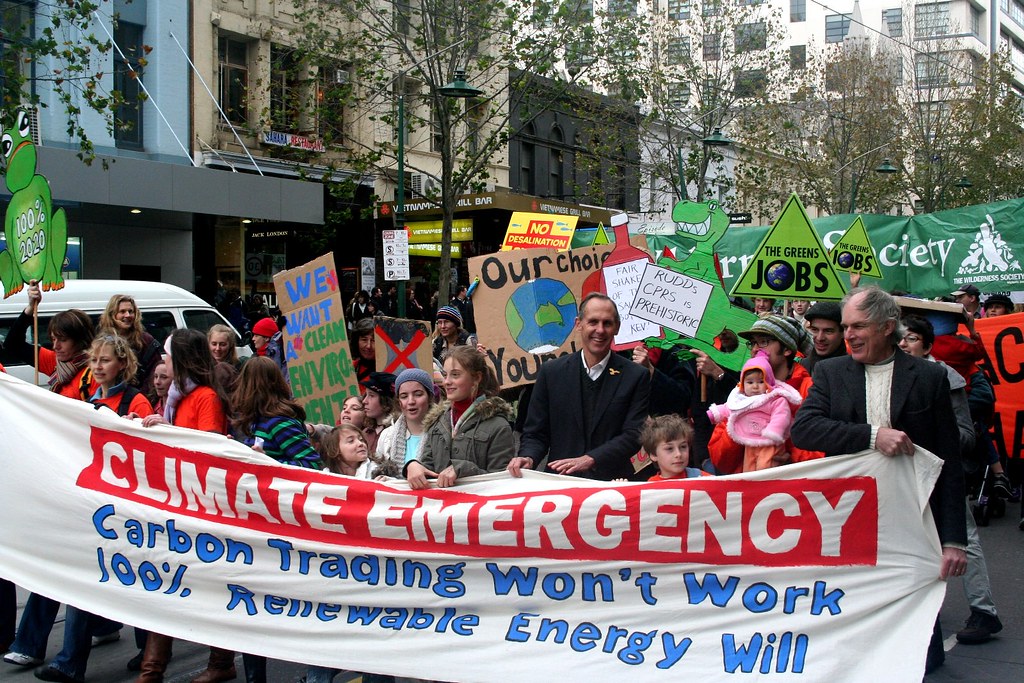
Even more frightening, it seems our belief that decisive climate action would effectively reverse the devastating impact of global warming was about as realistic as rubbing a bunch of crystals expecting them to manifest our wildest dreams. Even if we were to quit our carbon dependence cold turkey, the damage has been done. And that really is terrifying. Terrifying for myself. And terrifying for my friends’ children, who are still too young to even understand the nightmare that will shape every aspect of the world they’ll inherit.
For many Australians, the threat of climate change still feels comfortingly abstract most of the time. Sure, we’ve sweated through our share of hot Summers, but life, for the most part, goes on. That’s all set to change, according to experts including the NASA scientists who recently published an explainer of what we can expect in the coming decades of climate crisis.
One of their gravest concerns was the future of food security, an already critical issue with the World Bank reporting almost ten percent of the world’s population suffered hunger and malnutrition in 2023. Prepare for those numbers to blow the hell out as warming temperatures invite devastating drought, critically compromising crop production everywhere. Climate change also directly affects agriculture through sheer heat alone. For every degree above the optimal growing temperature, yields decline by an estimated ten percent,
The effects of a hotter, drier earth aren’t limited to the natural environment either. According to the Stanford Environmental Assessment Facility, the projected four degree atmospheric warming increases the risk of violent conflict by around twenty-six percent. The Association For Psychological Science are also predicting that a temperature increase of as little as one degree could occasion an additional twenty-five thousand violent crimes and deadly assaults in the US alone.
This predicted violence and unrest won’t be confined to the United States either. Climate change, and the associated destructive weather patterns and rising sea levels already widespread, has begun. creating an entire new category of refugees left displaced as global warming gradually renders their home uninhabitable. So far, the populations most affected have been those of sub-Saharan Africa, followed by parts of Southeast Asia including Vietnam and Bangladesh.

How Australia, a country that discourages even the relatively minimal number of refugee arrivals to the extent of threatening decade-plus offshore detention sentences to whoever dares try, will respond to what’s looking like an unprecedented and unavoidable increase in the numbers seeking asylum on our shores, is anyone’s guess.
However we choose to measure it, it’s become eye-wateringly clear that climate change is about to change almost every aspect of human life- for the decidedly worse. It almost makes us want to change the channel, put down the newspaper, stuff our fingers in our ears and pretend it’s not happening. Exactly what former Prime Minister Scott Morrison advised Australian schoolchildren to do back in 2019, lest they become distressed by the “needless anxiety” of receiving climate education.
It’s easier said than done however, when it’s your generation who’ll be left living with the climate crisis of their parents’ creation, long after Morrison has toppled from his perch to join the big Parliament in the sky. Dissatisfied with the PM’s suggestion of effectively ignoring the problem and hoping it will go away, in 2021 Australia’s youth successfully took Australian Minister for the Environment Sussan Ley to Federal Court, where it was found that the minister did have a duty of care to protect young people from the climate crisis. Recognising the intergenerational injustice that Australia’s leaders committed against the youth they’re supposed to protect, the history-making decision was a world-first the significance of which cannot be overstated. But if our politicians can be deemed responsible for the environmental atrocities today’s young people are faced with, what responsibility do parents owe to the children they brought knowingly and wilfully into a world that will boil them alive?
It’s not a problem I’ll ever face, having unequivocally decided not to have children myself. Admittedly, there are a few reasons behind this, and not all of them are entirely selfless. (For instance, I’m a passionate fan of sleeping, and I’ve heard young children aren’t exactly conducive to enjoying midday lie-ins.) I’d also worry about my genes passing them an above-average susceptibility to mental illness and addiction, and I’m morbidly afraid of seeing my kids suffer the crippling depression of my twenties.
And yes, it would also feel all kinds of wrong to put my person desire for children above the wellbeing of some brand-new person. Growing up blissfully unaware of the climate catastrophe he’s growing right into, while destined to make history as the first generation whose future looks bleaker than that of their parents.
I’m often curious as to how a close friend of mine and passionate environmentalist feels about her decision to have two children (and counting) who will both experience and contribute to the environmental disaster substantially caused by overpopulation and the disproportionate carbon footprint us car-driving, meat eating Western capitalists.
Close friends though we are, I’ve never had the guts to ask her. And that’s probably for the best. I don’t know a lot about parenting, but I do know that gently suggesting the world would be a better place if one’s children had never been born- and that they’d be better off not being born either- is generally frowned upon.
And anyway, maybe I’m wrong. For all I know my friend’s kids could grow up to be the next Greta Thunbergs and help get us out of this mess after all. That is, if he can live with the needless anxiety ScoMo so feared- as though knowledge of the problem, and not the problem itself, was responsible for raising a generation unfairly saddled with the insecurity and panic that characterises climate-induced dread.
But I do know that having an intelligent, environmentally conscious mum who will teach them to hope for the best while refusing to shy away from the worst, those kids have a better shot than most to ride out global boiling with enough empathy, courage, and determination to never wish his mum didn’t want kids.
Girls’ Locker Room Talk: art, articles and entertainment by women, for women (and everyone else)
 Girls' Locker Room Talk